Taken from: http://www.bbc.co.uk/radio4/factual/foodprogramme_20070624.shtml
An interesting but all to brief look at Chinese teas;
China claims to have 10,000 teas. All come from the camellia sinensis plant, but from that point on the complexities proliferate.
There are 400 varieties of tea plant, 6 types of tea all processed in a different way, and seemingly infinite variations of terroir and tea-producing traditions that have gone into creating the unique and complex culture of tea in China.
To try to understand some of these complexities, Andrew Jefford joins pioneering tea importer Edward Eisler of Jing Tea, as he visited some of his suppliers in China.
They begin their journey at the very farm which produced some of the first black teas ever shipped to Britain – Bohea Farm, in the Floating Dragon Gorge of Wuyi Mountains.
Bohea is a black tea made from wild, organically grown tea bushes, and in the early days bohea was a term used to describe all black teas from China. As a black tea the leaves are withered, then allowed to oxidise before they are processed, or gently heated, with smoke from local pine logs.
This subtly smoked flavour was the precursor of the more aggressively smoky Lapsang Souchong tea, made using different base teas and using more smoke. Andrew talks to Bohea Farm President, Jiang Yuanxun about the quality difference between Lapsang Souchong and Bohea.
Andrew visits the port city of Fuzhou and meets jasmine tea producer Zhen Zhen. She talks about tea making and drinking in modern day Chinese culture.
Andrew goes to Hangzhou in China’s biggest tea-producing province Zhejiang and talks to exporter Li Haitao where they visit a tea house in the water garden of China’s national tea museum. They drink Long Jing or Dragon Well tea, one of the most famous green teas in China, and a far cry from the green tea readily available in the UK. Ed explains how this is made.
Andrew visits the city of Guangzhou (formerly Canton) and Fangsun Market where he finds out about puerh tea, a tea from Yunnan Province which usually goes through a distinctive ageing process.
The rarest puerh teas are up to 100 years old, and for a 350g cake of “red seal” puerh, produced in the 1950s, you would pay £8,000. Andrew talks to Miss Zhiang Jung of the Men Dao Puerh Tea Connoisseur’s Club, which overlooks the Pearl River in Guangzhou, and samples the rare red seal puerh.
Also visit: http://jingtea.com
Showing posts with label tea. Show all posts
Showing posts with label tea. Show all posts
Thursday, 5 July 2007
Saturday, 9 June 2007
Wu Yi Shan: Day 3 (With some tasting notes)
9/5/07
-Up late, 10:00 though unsuprising the others also weren't up. Meet for breakfast/lunch.
-Get bus with plan to go to Da Hong Pao. Home of the famous 6 mother tea plants.
- Hot!
-Ask old man where to go. WL and I want to get a move on but the others amble a long. Wonderful natural surrounding with tea growing in a seemingly more mature way compared to the recent visit to Zhen Shan. Get called back by the others. Have been walking wrong way.
-Long walk but very peaceful
-Fresh roadside fruit delivery
-Buddist statue and carving with fresh mountain water.
-Get to Da Hong Pao entrance. Lots of Chinese tourists.
-Take the quiet routes!
-Tea growing amongst the almost jungle vegetation. Very dream like.
-Arrive at the sacred plants. Strange to think that some years only 100g of dried leaf can be made from these plants. Would be interesting to know who is chosen to process the wet leaf.
-Have to rush back to town to meet WL's friend. The other head to Shui Lian (Water curtain) waterfall.
-Dinner with WL's friend is a little odd, very stilted, but none the less a very pleasent man. I look forward to meeting him again once back in Shanghai.
-Wonder back from the hotel where we have dinner. Look at some of the lovely wood carvings that Wu Yi Shan has to boast.
-Find another teashop that I invited to taste some teas. I end up chatting to 2 Korean guys who are very knowledgable in their teas. Probably the highlight is tasting some old tea tree oolong. the trees are around 100 years old and the leaf shows the same characterists as is seen with the Pu Er's from Yunnan i.e. much broader leaf growth. This tea has plenty of Cha Qi. Before long my feet and legs are tingling nicely and getting quite hot, not long after this spreads to my hands. Lovely to be high on tea.
-Head back to the tea house from the previous day to buy some teas for WL to test out at her shop. Spot the others. Get them to test more teas.
-Packed up head back to hotel. The Owners of the tea shop give us some local Huang Jiu (Yellow Wine) to try.
1
-Up late, 10:00 though unsuprising the others also weren't up. Meet for breakfast/lunch.
-Get bus with plan to go to Da Hong Pao. Home of the famous 6 mother tea plants.
- Hot!
-Ask old man where to go. WL and I want to get a move on but the others amble a long. Wonderful natural surrounding with tea growing in a seemingly more mature way compared to the recent visit to Zhen Shan. Get called back by the others. Have been walking wrong way.
-Long walk but very peaceful
-Fresh roadside fruit delivery
-Buddist statue and carving with fresh mountain water.
-Get to Da Hong Pao entrance. Lots of Chinese tourists.
-Take the quiet routes!
-Tea growing amongst the almost jungle vegetation. Very dream like.
-Arrive at the sacred plants. Strange to think that some years only 100g of dried leaf can be made from these plants. Would be interesting to know who is chosen to process the wet leaf.
-Have to rush back to town to meet WL's friend. The other head to Shui Lian (Water curtain) waterfall.
-Dinner with WL's friend is a little odd, very stilted, but none the less a very pleasent man. I look forward to meeting him again once back in Shanghai.
-Wonder back from the hotel where we have dinner. Look at some of the lovely wood carvings that Wu Yi Shan has to boast.
-Find another teashop that I invited to taste some teas. I end up chatting to 2 Korean guys who are very knowledgable in their teas. Probably the highlight is tasting some old tea tree oolong. the trees are around 100 years old and the leaf shows the same characterists as is seen with the Pu Er's from Yunnan i.e. much broader leaf growth. This tea has plenty of Cha Qi. Before long my feet and legs are tingling nicely and getting quite hot, not long after this spreads to my hands. Lovely to be high on tea.
-Head back to the tea house from the previous day to buy some teas for WL to test out at her shop. Spot the others. Get them to test more teas.
-Packed up head back to hotel. The Owners of the tea shop give us some local Huang Jiu (Yellow Wine) to try.
1
Thursday, 7 June 2007
Wu Yi Shan: Tea and beautiful surroundings
Classmates;
- Noboko, Masariki, Huangy, Li Sa, Mei Yuan, An Ja
- Wan Ling
7/6/07
Meet WL at station
See first fight in China - walmart of all places
Everyone accept Mei Yuan arrive just in time. Have to run back to meet him with his ticket (19:00 --> train leaves 19:05)!!
Chatting and supping some beers
- Noboko, Masariki, Huangy, Li Sa, Mei Yuan, An Ja
- Wan Ling
7/6/07
Meet WL at station
See first fight in China - walmart of all places
Everyone accept Mei Yuan arrive just in time. Have to run back to meet him with his ticket (19:00 --> train leaves 19:05)!!
Chatting and supping some beers
Monday, 14 May 2007
Wan Ling Tea House: New An Xi Gallery added
Just uploaded the new pictures from Wan Ling and my trip to An Xi this month. These are not yet available from the site but you can take a sneak preview from here: An Xi Tie Guan Yin Tea Gallery
Please note the 'control' pannel in the bottom right which gives you a slide show option, the ability to view file names and alter the thumb nail view.
Let me know comments if anyone has any.
Please note the 'control' pannel in the bottom right which gives you a slide show option, the ability to view file names and alter the thumb nail view.
Let me know comments if anyone has any.
Friday, 11 May 2007
Zi sha tea pot family

Here are my close friends. I bought the far right one with me when I first arrived in Xiamen from Shanghai. This was one that Wan Ling purchased new for the Cha Dao class so that the attendees had pots to practice with. I find it is a great shape for Pu Er as it has a wide mouth and is not so squat that it is difficult to clean. Its capacity is also ideal for my use. The pot has come on tremendously since we got it. The colour has developed into a rich dark brown with a vibrant shine.
Previously I had always used a gai wan to prepare Oolong's such as An Xi Tie Guan Yin, however talking to a local tea shop owner here in Xiamen my mindset altered. He was almost shocked to hear that at home I just used a gai wan. His view was that in the shop then a gai wan is must but for yourself and close friends then a Yi Xing pot (or pots in his case) is a must.
The left most one is a little bit special and as such was a lot more expensive, but it is clear to see that the zi sha is of a much higher quality. This is an entirely hand made pot. I have reserved this one for only high grade Tie Guan Yin. The colour is yet to alter though that loved, used lustre has come though. It is remarkable how much 'life' comes from the pots with in a short space of time of use.
The middle pot I bought purely out of interest and as an experiment. I am interested to see how much this pot alters its colour. When we (the royal we; thank you again Wan Ling xxx) bought it the colour was almost white and quite dull. I have been using this pot for all Tie Guan Yin I have prepared since getting it. The colour has transformed in to a warm, goldern cream and increasingly has a good lustre to it. I look forward to seeing how this pot looks in a few more years. I hope it is as goldern as the tea liquor I am looking at now.
Question, should I name my pots???

Friday, 4 May 2007
Visit to Zhen Shan, An Xi

Travelling toward Zhen shan in nei An Xi. The new tea plantations can be clearly seen.

The man (women) from Wan Ling's Tea House says YES! Farmers queuing up with the latest teas (tie guan yin oolongs) they have produced that evening/day. Unfortunately not the clearest view of the old house we stayed in. Great place with mud walls very similar to those waddle and daub we have in the UK.

The views looking out over the village.

The view from the house we stayed at.

Thursday, 3 May 2007
Tea buying & production in An Xi, China.
Up bright and early. Already have farmers with their latest teas waiting for us to test them.
Interesting to note that just 18 hours after our arrival that the teas are already showing a considerable improvement in the flavour. Flavour now has much more depth and complexity; increasingly the teas have an additional sweetness and the bitterness of yesterday has mellowed so it is not the dominating taste. There is also a degree of the 'Guan Yin' taste & smell becoming noticeable. The teas on the whole improve throughout the day. All of these changes are down to the weather. The first day we arrived there had been rain the previous 2-3 days. Importantly for the farmers the prices also increased by 70-80% on the previous day.
Once the afternoon sun had subdued, around 15:30 Wan Ling and I took a walk to another of the hills. The lower hills were much more mature and with mixed crops including veg tables, bamboo and of course tea. The higher elevations had mostly been developed i.e. traditional forestation had been stripped, in the last 1-3 years. Although this created a somewhat imposing landscape of white clay and new tea trees the surround views were spectacular. We spend several hours on one of the peaks just laying on a giant rock talking and admiring the view. Wonderful. Just the sort of time I wanted and needed to spend after nearly 10 years working with sometime in human technology, in large cities.
Getting back to the house, surprisingly(!), it was time for dinner. We had the excellent bamboo shoots that we had at lunch and lots of great, local, fresh food. Yummy - although my belly is expanding at a horrendous rate. Also ate/drank for the first time ji mi jiu 鸡米酒.
Took time to visit some of the other farmers to compare their production techniques. Although each have their similarities with in the village there are numerous points that vary. The biggest challenge to recording a production schedule is the ambiguity in timings, for example: sun wilting can be done for anywhere between 0-8 hours depending on the weather, the quality of the leaf and the famers personal preference. This obviously is great for us the tea drinker as every 'batch' will have its own unique flavour and characteristics.
Interesting to note that just 18 hours after our arrival that the teas are already showing a considerable improvement in the flavour. Flavour now has much more depth and complexity; increasingly the teas have an additional sweetness and the bitterness of yesterday has mellowed so it is not the dominating taste. There is also a degree of the 'Guan Yin' taste & smell becoming noticeable. The teas on the whole improve throughout the day. All of these changes are down to the weather. The first day we arrived there had been rain the previous 2-3 days. Importantly for the farmers the prices also increased by 70-80% on the previous day.
Once the afternoon sun had subdued, around 15:30 Wan Ling and I took a walk to another of the hills. The lower hills were much more mature and with mixed crops including veg tables, bamboo and of course tea. The higher elevations had mostly been developed i.e. traditional forestation had been stripped, in the last 1-3 years. Although this created a somewhat imposing landscape of white clay and new tea trees the surround views were spectacular. We spend several hours on one of the peaks just laying on a giant rock talking and admiring the view. Wonderful. Just the sort of time I wanted and needed to spend after nearly 10 years working with sometime in human technology, in large cities.
Getting back to the house, surprisingly(!), it was time for dinner. We had the excellent bamboo shoots that we had at lunch and lots of great, local, fresh food. Yummy - although my belly is expanding at a horrendous rate. Also ate/drank for the first time ji mi jiu 鸡米酒.
Took time to visit some of the other farmers to compare their production techniques. Although each have their similarities with in the village there are numerous points that vary. The biggest challenge to recording a production schedule is the ambiguity in timings, for example: sun wilting can be done for anywhere between 0-8 hours depending on the weather, the quality of the leaf and the famers personal preference. This obviously is great for us the tea drinker as every 'batch' will have its own unique flavour and characteristics.
Wednesday, 2 May 2007
New Spring Tie Guan Yin buying trip
- Travel from An Xi to a small town in the hills where we used motorbike taxi's to get to Zhen Shan.
- Arrive in Zhen shan after a chat to the driver about motorbikes and computers!
- Old house. As usual they worry that it is not good enough and offer that I can stay in a new building in the main village! Old houses are great and this is typical of the old Chinese style with the open court yards. In this climate they are perfect, except for the mozzies.
- Good walk to 2 of the hills. Amazing views across the landscapes of strange hillocks - look like someone made neat piles of clay everywhere. Watch the boys on bike hairing up and down the small tracks collecting the freshly cut leaves. Large parts of the hills have been freshly terraced and planted with new trees. The oldest tea trees I find are around 10 years. Just thinking about heading to the next peak when I hear cries of ' Jun Cheng'. Spot Wan Ling on the hill opposite! Head back to the house then visit some farmers to watch them make Oolong tea and test some of the particially processed teas.
- Dinner
- Head to Wan Ling's biao ge's. Visit their relatives who also produce tea.
- Beer!
- Arrive in Zhen shan after a chat to the driver about motorbikes and computers!
- Old house. As usual they worry that it is not good enough and offer that I can stay in a new building in the main village! Old houses are great and this is typical of the old Chinese style with the open court yards. In this climate they are perfect, except for the mozzies.
- Good walk to 2 of the hills. Amazing views across the landscapes of strange hillocks - look like someone made neat piles of clay everywhere. Watch the boys on bike hairing up and down the small tracks collecting the freshly cut leaves. Large parts of the hills have been freshly terraced and planted with new trees. The oldest tea trees I find are around 10 years. Just thinking about heading to the next peak when I hear cries of ' Jun Cheng'. Spot Wan Ling on the hill opposite! Head back to the house then visit some farmers to watch them make Oolong tea and test some of the particially processed teas.
- Dinner
- Head to Wan Ling's biao ge's. Visit their relatives who also produce tea.
- Beer!
Monday, 23 April 2007
New sesson Oolongs arrive
Well had my first taste of the new season oolongs this week. Still limited in the range and grades available but none the less lovely to taste the fresh spring flavours.
Visited a different tea shop about 10 minutes away from where I am staying in Xiamen. Nice couple who ran it. Had a couple of well used and looked after Yi Xing pots + a new one that had been given to him which was made from an interesting green zi sha clay.
Visited a different tea shop about 10 minutes away from where I am staying in Xiamen. Nice couple who ran it. Had a couple of well used and looked after Yi Xing pots + a new one that had been given to him which was made from an interesting green zi sha clay.
Tuesday, 30 January 2007
Cha Dao (茶道) Class in Shanghai


Another Cha Class for a local overseas school in Shanghai. Based on feedback and the pre-class discussions Wan Ling incorporated a lot more practicals in this class. The attendees were able to practice using both Gai Wan's and Zi Sha (Yi Xing) tea pots, preparing Tie Guan Yin and Pu Er teas. As ever the 2 hours class ended up be more of 2 1/2 hour class! Hopefully everyone enjoyed and learnt a little more about Chinese tea and the pleasure it can bring.
Wednesday, 10 January 2007
Nilgris Hills
Met with Seni and headed out on the bus. Got front seat - great way to ride. Can see everything coming (is that good?!) Arrive in Glenmorgan , a small village built around a tea estate, one of the oldest in the region, and a huge hydro electric plant. The plant has a very interesting history and a remarkable project considering its age. Unfortunately we were unable to take pictures. But the image below looks over the natural, near vertical drop(41 degrees) that made the power plant so challenging but also very successful. There is also a winch driven 'train' that travels (I believe) nearly 4km to the power station below in Singara.
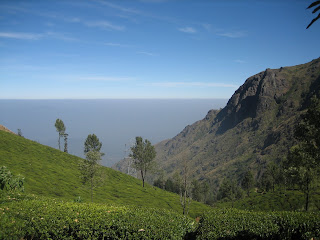
As you can see the view is undescribal - sensational.
Shortly after leaving here we stop in a small chai stand for morning snacks and chai.
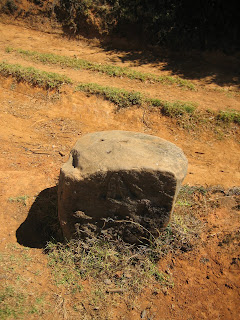
Toda stones.
After the Toda village we head down the hill, with stories of Seni's pilligramage journey & its entertain events. We find a spot on the way down for a little relax break & I sit in awe of yet another sensational view.
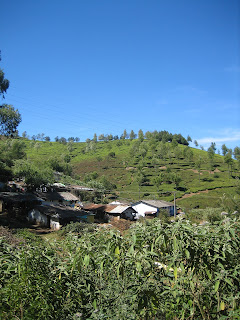
View looking back over the farmer houses toward the Glenmorgan tea estate.
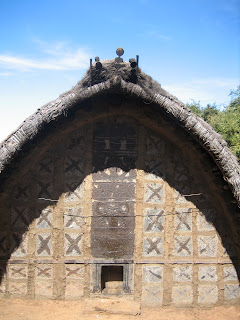
Stop in village for lunch. Good local food. Owner has very impressive water/tea/milk heater made from brass. Impressed by it engineering. Clever stuff that looks great too. Chai is lush too :o)
Our walk takes us on to Klamatey falls, with stories of an dutchman living in one of the remote house in hills.
http://www.ootacamund.com/History.htm

As you can see the view is undescribal - sensational.
Shortly after leaving here we stop in a small chai stand for morning snacks and chai.

Toda stones.
After the Toda village we head down the hill, with stories of Seni's pilligramage journey & its entertain events. We find a spot on the way down for a little relax break & I sit in awe of yet another sensational view.

View looking back over the farmer houses toward the Glenmorgan tea estate.

Stop in village for lunch. Good local food. Owner has very impressive water/tea/milk heater made from brass. Impressed by it engineering. Clever stuff that looks great too. Chai is lush too :o)
Our walk takes us on to Klamatey falls, with stories of an dutchman living in one of the remote house in hills.
http://www.ootacamund.com/History.htm
Subscribe to:
Posts (Atom)